Can Your Lack of Flexibility Be Due to Your Tongue?
Imagine stretching for a forward fold in yoga class, only to feel your hamstrings scream in protest, or bending to tie your shoes and noticing your back locks up. You have tried foam rolling, physical therapy, and endless mobility drills, yet the stiffness persists. What if the root cause is not in your legs or spine at all, but higher up, anchored in your mouth?
A restricted tongue, often from tongue tie, can create full-body tension through fascial connections. At Primal Air, we see this connection daily in clients seeking relief from chronic tightness, poor posture, and breathing issues. This is not fringe theory. It draws from established myofascial anatomy and clinical experience with orofacial myofunctional therapy (OMT), which helps address mouth breathing and its downstream effects.
The Hidden Chain: Understanding the Deep Front Line
Most people view flexibility as a matter of muscle length in the lower body. But the body operates as an interconnected system. The tongue is the starting point of the deep front line (DFL), a continuous fascial matrix described by anatomist Tom Myers. This line runs from the tongue and floor of the mouth, through the hyoid bone, respiratory diaphragm, pelvic floor, and onward to the inner legs and arches of the feet.
Fascia is the body's connective tissue web. When the tongue faces restriction, it tethers this line, creating compensatory tension elsewhere. This is myofascial tension in action. A tight lingual frenulum limits tongue elevation and range, forcing the head and neck to compensate with forward posture. That shift ripples downward, affecting spinal alignment, breathing mechanics, and even gait.
Tongue tie symptoms in adults often go unrecognized. They include:
Chronic neck, shoulder, or jaw tension
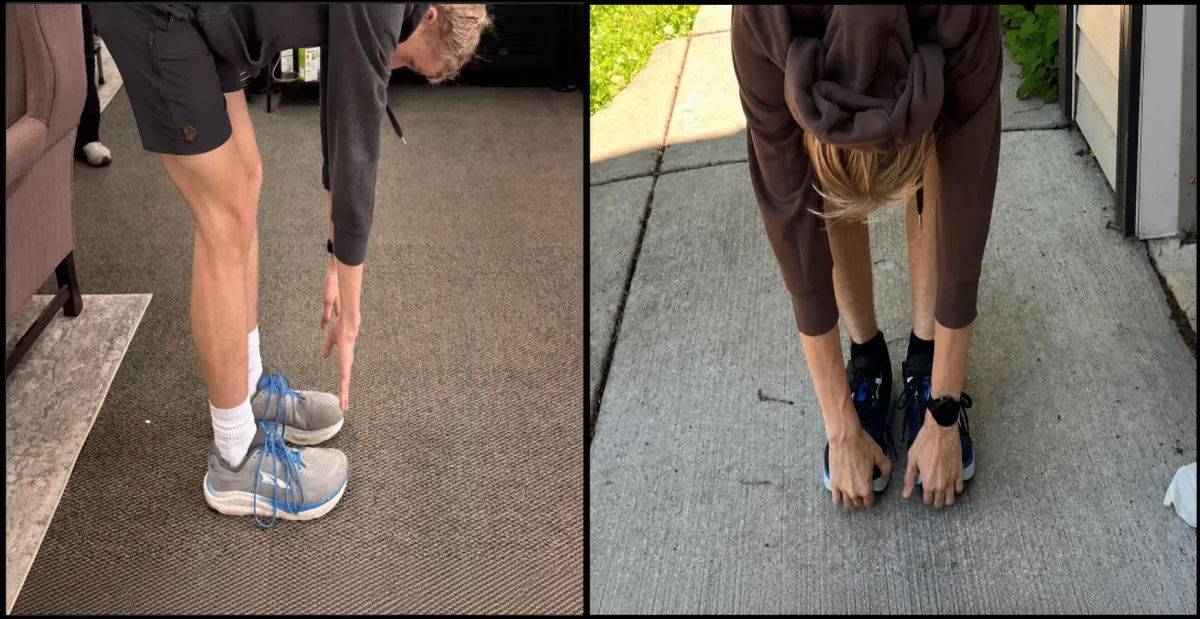
Difficulty touching toes or deep forward bends
Forward head posture
Mouth breathing or poor oral posture
TMJ discomfort or headaches
Fatigue from inefficient breathing
These issues link directly to restricted tongue mobility. When the tongue cannot rest properly against the palate (proper Tongue Posture), it disrupts nasal breathing and perpetuates a cycle of dysfunction.
The Architectural Tent Analogy: How One Tether Affects Everything
Picture a camping tent. The central pole provides structure, but guy lines anchor it. If one line at the peak pulls too tightly, the entire frame distorts. The fabric stretches unevenly, poles lean, and stability suffers.
A tongue tie acts like that overtightened top tether. It anchors the DFL at its origin. The body compensates by tightening muscles and fascia lower down to maintain balance and keep the airway open. The result? Stiff hamstrings, locked hips, rounded shoulders, and reduced overall mobility.
Clients often report that despite dedicated stretching, their range of motion plateaus. This makes sense: addressing symptoms in the legs ignores the structural restriction at the top of the chain. Releasing the tether and retraining function can restore balance surprisingly quickly for many.
Tongue Tie in Adults: More Common Than You Think
While often discussed in infants, tongue tie in adults remains underdiagnosed. Many live with it for decades, attributing symptoms to aging, stress, or "just how I am." Restricted tongue mobility affects Facial Muscle Function, swallowing, speech clarity, and oral posture.
Mouth breathing frequently accompanies it. Chronic mouth breathing bypasses the nose's natural filtering and humidifying, leading to drier airways, higher infection risk, disrupted sleep, and even changes in facial development over time. Orofacial myofunctional therapy targets these patterns by strengthening muscles and promoting nasal breathing.
Mouth-Breathing Correction and Orofacial Myofunctional Therapy
Orofacial myofunctional therapy is exercise-based training for the muscles of the face, mouth, and tongue. It corrects improper habits like mouth breathing, tongue thrusting, and low tongue posture. By establishing proper Tongue Posture, it supports better nasal breathing and reduces myofascial tension.
At Primal Air, protocols often combine OMT with breathing retraining. Clients learn to keep lips closed, teeth lightly together, and the tongue resting on the palate. This simple shift influences the entire deep front line, easing downstream tension.
Clinical observations and studies show OMT can improve breathing patterns, reduce snoring, enhance sleep quality, and support better posture. For those with tongue tie, therapy often pairs with professional release (frenectomy) for optimal results. Post-release exercises prevent re-adhesion and integrate new mobility.
One compelling example: Individuals with severe restrictions who could barely bend forward experience noticeable mobility gains after addressing the tongue and retraining respiratory mechanics. The body responds when the primary restriction lifts.
Tongue Tie and Posture: The Full-Body Impact
Poor oral posture from a restricted tongue encourages forward head position. This strains the neck and shoulders, alters spinal curves, and affects pelvic alignment via the fascial chain. Over time, it contributes to widespread stiffness.
Addressing tongue tie and posture together, through OMT and potential release, helps unwind these patterns. Many report not just better flexibility but also reduced pain, improved energy, and easier daily movement.
Why Traditional Mobility Work Often Falls Short
Fitness enthusiasts invest heavily in stretching and bodywork yet hit walls. Without addressing oral restrictions and mouth breathing, the DFL remains under tension. The tongue acts as an anchor. Releasing and retraining it allows downstream work to hold better.
This approach raises the standard for health. It shifts focus from isolated fixes to systemic ones, aligning with Primal Air's emphasis on prevention and natural function.
Your Next Steps
If you suspect a connection between your tongue and flexibility (or experience tongue tie symptoms), consider a professional airway assessment. At Primal Air, we evaluate oral function, posture, and breathing patterns to create personalized plans involving orofacial myofunctional therapy.
Simple self-checks include:
Can you lift your tongue to touch the roof of your mouth comfortably?
Do you breathe primarily through your mouth, especially at rest or during sleep?
Do you have a history of dental crowding, jaw issues, or persistent tightness despite stretching?
These clues warrant deeper exploration. Early intervention with Mouth-Breathing Correction and proper Tongue Posture yields lasting benefits.
Real-World Transformations
Clients often share stories of reduced neck pain, better sleep, and newfound ease in movement after addressing restricted tongue mobility. One common theme: "I didn't realize how much my tongue was holding me back."
These changes highlight the power of connecting dots between oral function and whole-body health.
Expanding on Health Implications of Mouth Breathing
Mouth breathing, often tied to tongue restrictions, has broader effects. It can contribute to lower oxygen intake, disrupted sleep, increased stress on the cardiovascular system, and even impacts on facial aesthetics over time. Orofacial myofunctional therapy helps by retraining muscles to support nasal breathing, which filters air, produces nitric oxide for better circulation, and stabilizes the airway.
Combined with attention to fascial connections, this therapy offers a holistic path. It improves not only flexibility but overall resilience.
Integrating Therapy into Daily Life
OMT exercises are gentle and progressive. They build awareness of Facial Muscle Function and encourage consistent oral posture. Over weeks and months, these habits rewire neuromuscular patterns, supporting sustained flexibility gains.
Professionals at clinics like Primal Air guide the process, ensuring safety and effectiveness, especially when tongue tie release is part of the plan.
Prevention for Future Generations
Understanding these connections helps parents spot issues early in children. Proper oral habits support healthy craniofacial development, reducing risks of tongue tie symptoms later.
Unlock Your Body's Potential
Your lack of flexibility may indeed trace back to your tongue. By recognizing the role of tongue tie, fascial connections, and oral posture, you open doors to more effective solutions. Orofacial myofunctional therapy, combined with mouth-breathing correction when needed, addresses root causes rather than symptoms alone.
Stop settling for partial relief. Explore how optimizing tongue function can transform your mobility, posture, breathing, and overall well-being. Book an airway assessment today and experience the difference a balanced deep front line can make.
FAQs
What are common tongue tie symptoms in adults?
Symptoms include restricted tongue mobility, jaw or neck tension, poor posture, mouth breathing, headaches, and difficulty with certain movements or speech sounds. Many adults remain unaware until assessed.
Can orofacial myofunctional therapy help with flexibility?
Yes. By releasing restrictions and retraining tongue posture and breathing, OMT reduces myofascial tension along the deep front line, often leading to improved full-body mobility.
How does tongue tie affect posture?
Restricted mobility pulls on fascial chains, promoting forward head posture and compensatory tightness elsewhere. Correcting it supports better alignment from head to toe.
Is tongue tie release necessary for everyone with restrictions?
Not always. Many benefit from OMT alone, but significant ties often require professional release followed by therapy for best results in mobility and breathing.
What should I expect from an airway assessment at Primal Air?
A thorough evaluation of oral function, posture, breathing patterns, and personalized recommendations, often including myofunctional exercises or referrals for tongue tie release.
This article draws on established anatomical principles and clinical insights to provide actionable information. For personalized advice, consult qualified professionals.
Discover how to Identify Orofacial Myofunctional Disorders and how Orofacial Myofunctional Therapy can help - read our recent article here...