
Could Poor Breathing Cause Teeth Grinding in Children?
Hearing your child grind their teeth while sleeping can be unsettling. The sound can be surprisingly loud, and for many parents the immediate concern is understandably focused on the teeth. They may wonder whether the teeth grinding is damaging the enamel, affecting the jaw or signaling a dental problem that needs treatment.
The teeth, however, may not be the only place worth looking.
Teeth grinding during sleep, commonly referred to as sleep bruxism, is a complex behavior with several possible contributing factors. Research involving children has found associations between sleep bruxism and issues such as snoring, mouth breathing, restless sleep and sleep-related breathing disorders. An association does not mean that poor breathing directly causes a child to grind their teeth, but it does suggest that breathing and sleep may deserve attention when grinding happens regularly.
For parents, this creates a broader and potentially more useful way of looking at the problem. Instead of focusing exclusively on how to stop the grinding, it can be helpful to consider what else is happening while the child sleeps. How are they breathing? Is their mouth open? Do they snore? Is their sleep peaceful or restless? Do they wake feeling refreshed?
Looking at these patterns can provide valuable context. It can also help determine whether nasal breathing, tongue posture, sleep quality or oral muscle function should be assessed. In appropriate cases, this wider evaluation may identify a role for Orofacial Myofunctional Therapy or Breathing Retraining as part of a broader approach to improving breathing and oral function.
Teeth Grinding in Children Is Not Always Just About the Teeth
Bruxism in children can occur while they are awake or during sleep. Sleep bruxism in children refers to repetitive jaw muscle activity during sleep that can involve grinding, clenching or movement of the lower jaw. Parents are often the first people to notice it because the grinding may be clearly audible at night, while the child may have no idea that it is happening.
This can make the problem confusing. The most obvious symptom involves the teeth, yet the factors associated with bruxism can extend beyond dentistry. Research into childhood bruxism has examined genetics, emotional and behavioral factors, sleep patterns, medications, neurological influences and sleep-related breathing disorders.
The important point is that a child grinding teeth at night does not automatically have a breathing disorder. At the same time, repeated grinding should not always be considered an isolated dental behavior, particularly when it occurs alongside persistent mouth breathing, snoring, restless sleep or other signs of disrupted breathing.
A dental assessment remains important when grinding is frequent or there are concerns about tooth wear, sensitivity, jaw discomfort or other oral symptoms. However, parents can also provide valuable information by paying attention to what happens during the child's sleep rather than concentrating only on the sound of grinding.
What Does Breathing Have to Do With Teeth Grinding?
One of the most interesting areas of research is the relationship between sleep bruxism and sleep-related breathing.
Studies examining sleep bruxism and respiratory disorders in children and adolescents have identified a relationship between the two, but the evidence does not support a simple conclusion that poor breathing directly causes teeth grinding. A more accurate interpretation is that breathing difficulties may be one of several factors contributing to the broader sleep pattern in some children.
This distinction is important because sleep is a complex process involving breathing, brain activity, muscle tone, jaw movement and brief arousals throughout the night. Researchers are still working to understand how these processes interact and why some children grind their teeth while sleeping.
Research into sleep behaviors associated with bruxism in children has also identified links with snoring, mouth breathing, restless sleep and inadequate sleep. These findings do not prove that breathing problems are the cause of grinding, but they do suggest that persistent teeth grinding should sometimes be considered within the wider context of sleep and breathing rather than treated as an isolated dental issue.
For parents, this means that the grinding itself can be viewed as one piece of information. When combined with observations about breathing, sleeping position, snoring, mouth posture and daytime wellbeing, it may help build a more complete picture of what is happening during the night.
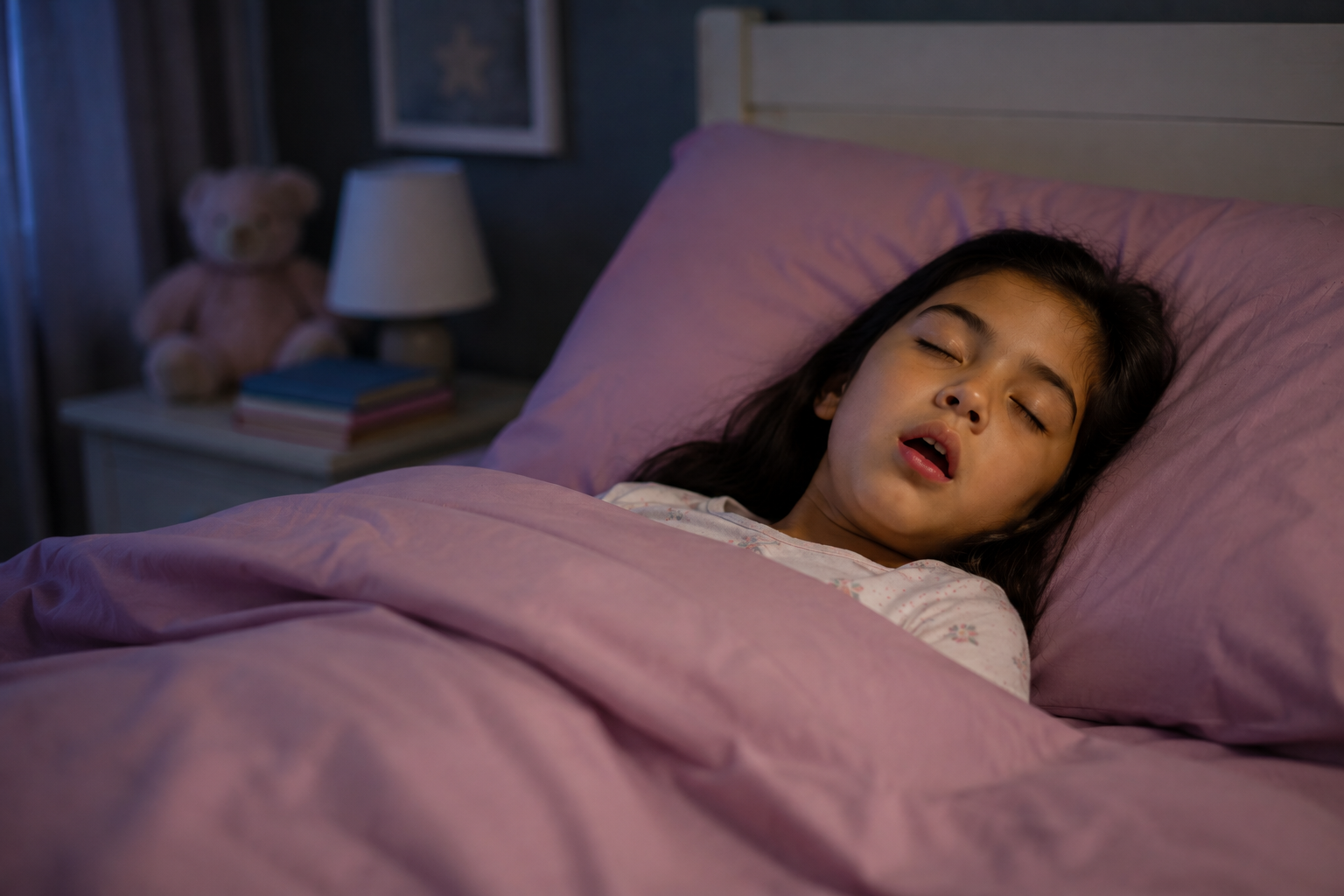
Watch the Child, Not Just the Grinding
A child who occasionally grinds their teeth but otherwise breathes quietly, sleeps comfortably and wakes refreshed may present a very different picture from a child who grinds regularly while also displaying several breathing or sleep-related symptoms.
Parents do not need specialist equipment to notice useful patterns. Simple observations made over several nights can provide helpful information to share with a dentist, doctor, sleep professional or orofacial myofunctional therapist.
Signs worth noticing can include:
Regular mouth breathing during the day
Sleeping with the mouth open
Frequent or persistent snoring
Noisy or labored breathing during sleep
Restless or frequently disrupted sleep
Waking with a dry mouth
Difficulty breathing comfortably through the nose
Unusual sleeping positions
Daytime tiredness or difficulty waking
Difficulty maintaining a comfortable lip seal at rest
Concerns about tongue posture
None of these signs confirms that a child has a sleep or breathing disorder, and they do not establish that breathing is responsible for the teeth grinding. They do, however, provide useful context and may indicate that the child's breathing and sleep deserve further assessment, particularly when several symptoms occur together or continue over time.
Mouth Breathing May Be an Important Clue
Mouth breathing and teeth grinding are different behaviors, but the association identified in research makes persistent mouth breathing particularly relevant when looking at a child's overall sleep and oral function.
Everyone breathes through the mouth occasionally. A blocked nose during a cold or temporary congestion can make mouth breathing necessary for a short period. Persistent mouth breathing in children is different because it raises the question of why comfortable nasal breathing is not being maintained.
There can be several possible reasons. Nasal congestion associated with allergies, enlarged tonsils or adenoids, structural differences within the nose or upper airway and other medical factors may interfere with nasal breathing. In some children, an established mouth-breathing pattern can also persist after an earlier obstruction has improved.
This is why mouth-breathing correction should not simply involve instructing a child to keep their mouth closed. If nasal breathing is difficult, the reason needs to be understood before attempting to change the breathing pattern. Depending on the child's symptoms, assessment by an appropriate medical, dental, ENT or sleep professional may be necessary.
Once comfortable nasal breathing is possible, attention can then turn to whether habitual breathing patterns, tongue posture or oral muscle function also require retraining.
The Tongue, Lips and Oral Muscles Are Part of the Breathing Picture
Breathing is often thought of primarily as a function of the lungs, but the nose, tongue, lips, jaw and surrounding facial muscles also form part of the functional breathing environment.
The resting position of the tongue is particularly relevant to Orofacial Myofunctional Therapy. The tongue is not only active when a child speaks, eats or swallows. It also has a resting posture, and this posture interacts with the position of the lips and jaw.
When a child habitually keeps the mouth open, the tongue may adopt a different resting position and the lips and surrounding facial muscles may function differently. These patterns can become established over time, which is why simply reminding a child to close their mouth may not create a lasting change.
An assessment of oral muscle function may therefore consider how comfortably the child breathes through the nose, whether the lips remain apart at rest, where the tongue rests when the child is not eating or speaking and how the tongue, lips and jaw coordinate during swallowing and other everyday functions.
Another important consideration is whether mouth breathing continues after an airway or nasal issue has already been addressed. In these situations, a learned breathing or oral posture pattern may remain and could potentially benefit from appropriate functional retraining.
Why Poor Breathing During Sleep Deserves Attention
Parents understandably worry about whether grinding will damage their child's teeth, but persistent poor breathing during sleep can have implications that extend beyond dental health.
Healthy sleep depends on the ability to move through normal sleep cycles with as little unnecessary disruption as possible. Sleep health and breathing disorders can affect sleep quality and, depending on their nature and severity, may influence how rested and alert a child feels during the day.
Persistent snoring, witnessed pauses in breathing, choking or gasping during sleep and significant daytime sleepiness are symptoms that deserve medical attention. These should not be assumed to be purely myofunctional problems or treated only with breathing and facial muscle exercises.
This is an important boundary when discussing Myofunctional Therapy. Orofacial Myofunctional Therapy can address aspects of oral function, muscle coordination and habitual patterns, but it does not replace appropriate investigation or treatment of an underlying medical or structural airway problem.
Teeth grinding may simply be the symptom that first attracts a parent's attention. The broader objective is to make sure that potentially important breathing or sleep symptoms are not overlooked because everyone is concentrating on the teeth.
Where Does Orofacial Myofunctional Therapy Fit?
Orofacial Myofunctional Therapy, often shortened to OMT or simply called Myofunctional Therapy, focuses on the function and coordination of the tongue, lips, jaw and other muscles of the mouth and face.
Orofacial myofunctional therapists assess functional patterns rather than focusing on a single symptom. Depending on the individual child and the therapist's professional scope, this may include oral resting posture, tongue position, lip function, swallowing patterns and habitual mouth breathing.
Therapy typically involves targeted exercises and behavioral retraining designed to improve awareness, coordination and function. The objective is not simply to strengthen facial muscles. It is to help the tongue, lips, jaw and breathing patterns work together more effectively where a functional problem has been identified.
For a child who grinds their teeth and also presents with persistent mouth breathing, poor lip seal or dysfunctional tongue posture, Myofunctional Therapy may therefore form one part of a broader treatment approach.
It is equally important to understand what OMT is not. Myofunctional Therapy should not be presented as a universal treatment for bruxism in children, nor should it replace the diagnosis and treatment of an underlying airway, dental, medical or sleep condition.
A useful starting point is always to understand why the child is experiencing the symptoms before deciding which form of treatment or retraining is appropriate.

Can Myofunctional Therapy Improve Breathing During Sleep?
Research has examined Myofunctional Therapy as an adjunctive approach for people with obstructive sleep apnea and other forms of sleep-disordered breathing. Exercises used in these programs may target tongue placement, oral posture and muscles involved in the upper airway.
Some studies have reported improvements in certain sleep-related measures, including research involving children. However, the pediatric evidence remains limited and results are not consistent across all studies.
This makes careful language particularly important. Orofacial Myofunctional Therapy should not be presented as a cure for sleep apnea, sleep bruxism or every case of mouth breathing. Instead, it may be considered as part of a wider treatment strategy when assessment identifies dysfunctional oral or breathing patterns that are suitable for retraining.
In practice, the most appropriate approach may involve more than one professional. Depending on the child, dentists, orthodontists, ENT specialists, pediatricians, sleep professionals and orofacial myofunctional therapists may each have a different role.
For parents, the central point is that Myofunctional Therapy can be relevant to breathing and oral function, but it needs to be used for the right reasons and within the appropriate clinical context.
What About Breathing Retraining?
Breathing Retraining takes a related but somewhat different approach to Orofacial Myofunctional Therapy. While OMT focuses strongly on the functional patterns of the mouth, tongue, lips and face, Breathing Retraining focuses more directly on breathing behavior.
At Primal Air, Breathing Retraining can include approaches informed by Buteyko techniques, with the aim of helping develop calmer and more functional breathing patterns where these methods are appropriate for the individual.
The relationship between breathing behavior and oral function is one reason these approaches can complement each other. For example, working on tongue posture without understanding why a child continues to breathe through the mouth may leave an important part of the problem unresolved. Similarly, practicing breathing exercises without considering dysfunctional oral muscle function may fail to address established patterns involving the tongue, lips or jaw.
This does not mean that every child who grinds their teeth needs both therapies. The appropriate approach depends on what an assessment identifies. Where both dysfunctional breathing and oral muscle patterns are present, however, considering them together may provide a more complete functional picture.
Mouth-Breathing Correction Is Not About Forcing the Lips Closed
The growing popularity of online breathing advice has made nasal breathing a widely discussed topic, but it has also encouraged some oversimplified solutions.
A child who cannot breathe comfortably through the nose should not simply be told to keep the mouth closed. Effective mouth-breathing correction starts by understanding whether the nasal airway is sufficiently clear and why the child has adopted mouth breathing in the first place.
Depending on the presentation, this may require input from an ENT specialist, dentist, orthodontist, pediatrician, sleep specialist or another appropriately trained healthcare professional. Allergies, nasal congestion, enlarged tonsils or adenoids and structural factors may all need to be considered.
Once medical or structural obstacles have been investigated and managed where necessary, persistent dysfunctional breathing and oral patterns may be suitable for retraining.
This is where Breathing Retraining and Myofunctional Therapy can become particularly relevant. The objective is not merely to close the child's mouth. It is to help establish comfortable and sustainable nasal breathing, together with appropriate oral rest posture and muscle function where this is achievable.

A Practical Framework for Parents
If you regularly hear grinding from your child's bedroom, it can be useful to resist the temptation to focus exclusively on stopping the sound. Instead, observe the broader pattern over several nights and consider whether the grinding occurs alongside other breathing, sleep or oral symptoms.
A practical approach could include:
Observe how your child breathes while awake and asleep, including whether the mouth regularly remains open.
Arrange a dental assessment if grinding is frequent or associated with pain, tooth sensitivity, visible wear or jaw discomfort.
Tell the healthcare professional about any snoring, restless sleep, open-mouth sleeping or other breathing symptoms rather than reporting only the teeth grinding.
Investigate possible airway, medical, sleep or dental causes where appropriate.
Consider an assessment of oral muscle function and breathing patterns if functional concerns remain.
Explore Myofunctional Therapy or Breathing Retraining when dysfunctional patterns are identified and these approaches are considered appropriate.
This framework does not assume that one therapy will solve every case of childhood bruxism. Instead, it helps parents move from noticing a symptom to understanding the broader factors that may be contributing to it.
Facial Development and Dental Health Are Part of the Bigger Picture
Persistent mouth breathing is also relevant because breathing patterns, tongue posture and oral function form part of the environment in which a child's face, jaws and teeth develop.
This does not mean that mouth breathing alone determines facial development and dental health. Genetics, growth, airway anatomy, oral habits and many other factors contribute to craniofacial development.
The tongue, however, is not simply used for eating and speaking. Its resting position and movement contribute to the functional environment of the mouth. The lips and facial muscles are also active parts of oral rest posture, swallowing and everyday movement.
When a child presents with a combination of mouth breathing, unusual tongue posture, difficulty maintaining lip seal, sleep concerns and teeth grinding, considering these features together can provide more useful information than treating each one as an unrelated problem.
This broader functional perspective is one of the reasons Orofacial Myofunctional Therapy looks beyond individual symptoms. The purpose is to identify patterns that may be affecting breathing and oral function and determine whether those patterns can be appropriately retrained.
Looking Beyond the Sound
Teeth grinding can be noisy enough to make any parent worry, but the most useful response may involve looking beyond the teeth and considering what else is happening while the child sleeps.
Current research suggests an association between sleep bruxism in children and sleep-related breathing issues, including mouth breathing and snoring. The evidence does not establish that poor breathing is the cause of every child's bruxism, which is why individual assessment remains important.
One child who grinds their teeth may simply need monitoring and dental care. Another may have several signs suggesting that sleep, breathing, tongue posture and oral muscle function deserve closer attention. Recognising that difference can help parents seek the most appropriate assessment rather than relying on a one-size-fits-all solution.
When mouth breathing and dysfunctional oral patterns form part of the picture, Orofacial Myofunctional Therapy and Breathing Retraining may have a role within an appropriately coordinated treatment plan. At Primal Air, the focus is on looking at breathing and oral function together, rather than treating a single symptom in isolation.
The objective is not simply quieter sleep. It is to understand how a child is breathing, sleeping and functioning and to address the factors that genuinely need attention.
If your child regularly grinds their teeth and you have also noticed mouth breathing, open-mouth sleeping, snoring or concerns about tongue and facial muscle function, a comprehensive assessment can help determine what may be contributing and what the appropriate next step should be.
Frequently Asked Questions
Can mouth breathing cause teeth grinding in children?
Research has found associations between mouth breathing and bruxism in children, but this does not prove that mouth breathing directly causes teeth grinding. Sleep bruxism is considered multifactorial, meaning several factors may contribute. When persistent mouth breathing and grinding occur together, it may be useful to consider the child's breathing, sleep and oral function as part of the assessment.
Should I worry if my child grinds their teeth while sleeping?
Occasional grinding does not automatically indicate a serious problem. It is worth seeking professional advice when the grinding is frequent, causes pain or visible tooth wear, or occurs alongside persistent snoring, mouth breathing, restless sleep, gasping or pauses in breathing. These additional symptoms can provide important clues about whether further dental, medical or sleep assessment is needed.
Can Orofacial Myofunctional Therapy stop teeth grinding?
Orofacial Myofunctional Therapy should not be considered a direct cure for sleep bruxism. It focuses on tongue posture, lip function, swallowing, oral muscle function and related functional patterns. It may be relevant when mouth breathing or dysfunctional oral patterns form part of a child's wider presentation, but the factors contributing to the grinding should first be appropriately assessed.
How can I tell if my child's teeth grinding may be related to breathing?
Parents can look for additional signs such as regular mouth breathing, sleeping with the mouth open, persistent snoring, noisy breathing, restless sleep or difficulty breathing comfortably through the nose. These observations cannot establish that breathing is causing the grinding, but they can provide valuable information for a healthcare professional assessing the child.
Can Breathing Retraining help a child who breathes through their mouth?
Breathing Retraining may help selected children develop more functional breathing habits when habitual dysfunctional breathing is present. However, if a child cannot comfortably breathe through the nose, possible medical or structural reasons should be investigated first. Once comfortable nasal breathing is possible, Breathing Retraining and Myofunctional Therapy may be considered when an assessment identifies breathing or oral patterns that could benefit from retraining.
Discover how to Identify Orofacial Myofunctional Disorders and how Orofacial Myofunctional Therapy can help - read our recent article here...