Can Myofunctional Therapy Prevent Orthodontic Relapse?
You finally reached the finish line.
After months, and sometimes years, of orthodontic treatment, your braces came off or your final aligner was removed. Your teeth looked straighter, your smile felt more confident and the investment of time and money seemed worthwhile.
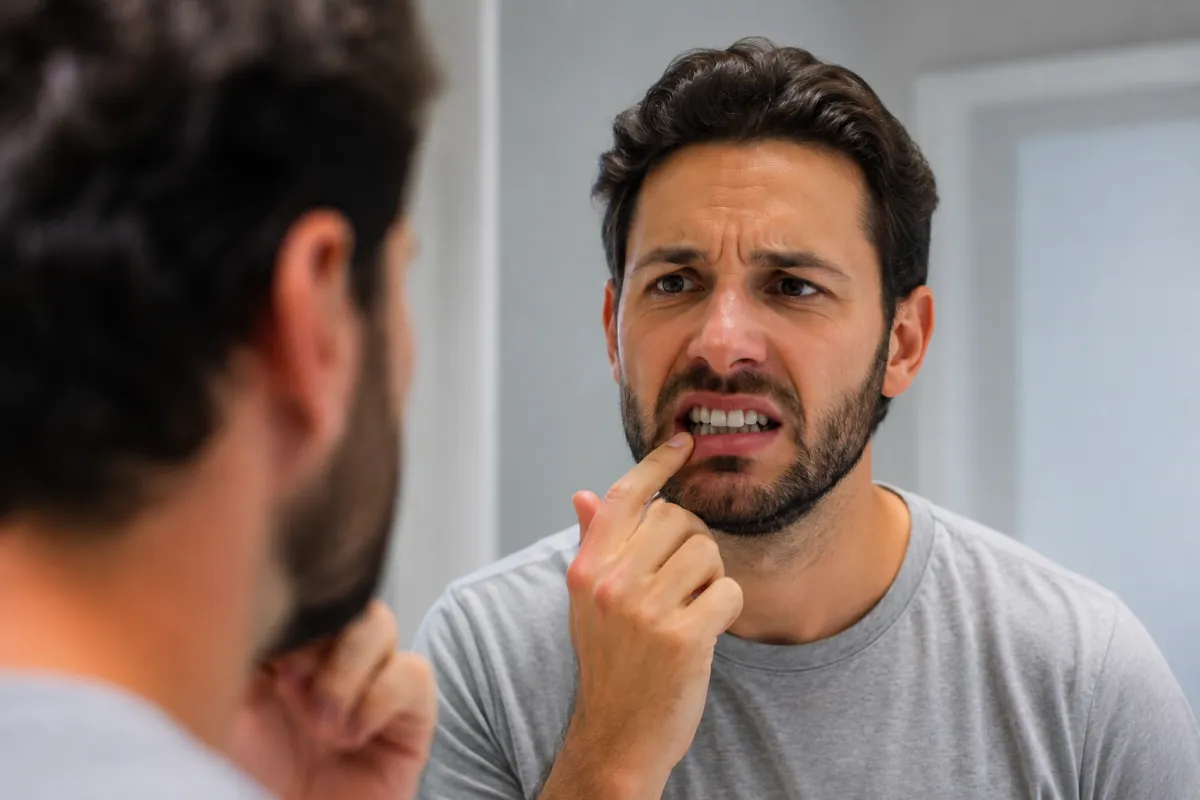
Then something changed. Orthodontic relapse is more common than many people realize and can occur when teeth gradually begin shifting back toward their original positions after treatment. Perhaps you noticed a lower front tooth beginning to crowd again. Maybe a small gap that had closed started to reappear. Or perhaps your dentist mentioned subtle movement that you had not yet noticed yourself.
For many patients, these changes can be frustrating and confusing. After all, if orthodontic treatment successfully moved the teeth into the correct position, why would they start moving again?
For many people, this experience is both surprising and frustrating.
After all, if orthodontic treatment moved the teeth into their ideal position, why would they move back?
The answer is more complicated than many people realise.
While retainers remain one of the most important tools for maintaining orthodontic results, researchers and clinicians are increasingly paying attention to another factor that may influence long-term stability: oral function.
This includes how you breathe, where your tongue rests and how the muscles of the face and mouth work together throughout the day and night.
This is where Orofacial Myofunctional Therapy enters the conversation.
By addressing habits such as mouth breathing, Tongue Thrust and poor Tongue Posture, Myofunctional Therapy aims to improve the environment surrounding the teeth. For some patients, this may provide an important missing piece in supporting long-term orthodontic success.
But can it actually help Prevent Orthodontic Relapse?
To answer that question, we first need to understand why teeth move after braces in the first place.
Why Do Teeth Move Back After Braces?
One of the biggest misconceptions about orthodontic treatment is that once teeth have been straightened, they remain in that position forever.
In reality, the mouth is a dynamic system.
Your teeth are constantly influenced by forces from the tongue, lips, cheeks and surrounding muscles. Bone tissue also continues to adapt throughout life. Even natural aging can contribute to changes in dental alignment.
This is why orthodontists place such a strong emphasis on retainers after treatment. Retainers help maintain the new position of the teeth while the surrounding tissues adapt.
However, retainers are only one part of the picture.
Imagine spending years renovating a house while ignoring a slow leak in the roof. The renovation may look fantastic initially, but unless the underlying problem is addressed, damage can gradually return.
A similar principle can apply to orthodontic treatment.
If certain oral habits continue after braces are removed, the forces acting on the teeth may remain unchanged. Over time, those forces may contribute to Teeth Moving After Braces or Teeth Shifting After Braces.
This is one reason why clinicians are becoming increasingly interested in the relationship between orthodontic stability and oral function.

Can Tongue Posture Affect Teeth Alignment?
Most people spend very little time thinking about where their tongue rests.
Yet the tongue is one of the most powerful influences inside the mouth.
When functioning optimally, the tongue generally rests against the roof of the mouth while the lips remain comfortably closed and breathing occurs through the nose. This position helps create balance between the tongue and the surrounding facial muscles.
Problems can arise when that balance changes.
A tongue that consistently rests low in the mouth may not provide the same support for the upper dental arch. Over months and years, this altered posture may influence the forces acting on the teeth and surrounding structures.
Tongue Posture has become a major area of interest within Orofacial Myofunctional Therapy because it influences much more than appearance alone. It affects breathing, swallowing and overall Oral Muscle Function.
Many people are surprised to learn that the tongue remains active even during sleep. If it consistently rests in a less-than-ideal position, the effects can accumulate over time.
This does not mean poor tongue posture automatically causes Orthodontic Relapse. However, it may be one contributing factor that deserves attention, particularly in individuals who have experienced recurring tooth movement.
Does Mouth Breathing Cause Orthodontic Relapse?
Breathing may seem unrelated to orthodontics at first glance.
However, the connection becomes easier to understand when we consider what happens inside the mouth during chronic mouth breathing.
When breathing occurs through the mouth, the tongue often rests lower than it should. The lips may remain open and the muscles of the face adapt to support this altered breathing pattern.
Over time, these changes can influence both Facial Muscle Function and Oral Muscle Function.
For growing children, mouth breathing has been associated with changes in facial development and dental growth patterns. For adults, chronic mouth breathing may reinforce habits that affect oral posture and muscle balance.
Many people who seek Mouth-Breathing Correction initially do so because of symptoms such as dry mouth, snoring or poor sleep quality. What they often discover is that their breathing habits may also be influencing other aspects of their health.
This broader perspective is one reason Myofunctional Therapy frequently includes breathing retraining strategies alongside exercises for the tongue and facial muscles.
Rather than viewing orthodontics, breathing and muscle function as separate issues, many practitioners now see them as interconnected pieces of the same puzzle.

Can Tongue Thrust Move Teeth?
Tongue Thrust is another common area of focus within Orofacial Myofunctional Therapy.
The term refers to a pattern in which the tongue pushes against or between the teeth during swallowing, speaking or even at rest.
At first, this may not sound particularly significant.
However, consider how often swallowing occurs.
Most people swallow hundreds, and sometimes thousands, of times every day. If the tongue repeatedly presses against the teeth during each swallow, that force is being applied again and again over many years.
For some individuals, this repetitive pressure may contribute to unwanted tooth movement.
Not every person with Tongue Thrust develops Orthodontic Relapse, and not every case of orthodontic relapse is caused by tongue thrust. Human biology is rarely that simple.
Nevertheless, identifying and addressing dysfunctional swallowing patterns may help reduce one potential source of pressure acting on the teeth.
This is why Orofacial Myofunctional Therapists often assess swallowing mechanics as part of a comprehensive evaluation.
Why Do My Teeth Keep Shifting Even Though I Wear My Retainer?
This question highlights an important reality.
Many patients who experience orthodontic relapse have been diligent about wearing their retainers.
When this happens, it is natural to wonder whether something else is influencing the outcome.
The answer is often yes.
Retainers help maintain tooth position, but they do not change how a person breathes, swallows or rests their tongue. They also do not automatically correct long-standing oral habits.
If the muscles surrounding the teeth continue applying pressure in a particular direction, those forces may still influence the oral environment.
This does not mean retainers are ineffective. Far from it.
Rather, it suggests that long-term stability may depend on both mechanical support and healthy function.
The goal is not to choose one approach over the other. Instead, it is to understand how they work together.
Can Myofunctional Therapy Help Keep Teeth Straight After Braces?
This is the question at the heart of the discussion.
Orofacial Myofunctional Therapy focuses on improving the function of the muscles of the tongue, lips, cheeks and face. Instead of concentrating solely on tooth position, it addresses the habits and patterns that influence oral health every day.
A therapy programme may include exercises designed to improve tongue posture, encourage nasal breathing and support more efficient swallowing patterns.
The objective is not to replace orthodontic treatment or eliminate the need for retainers.
Rather, the goal is to create a healthier functional environment around the teeth.
Many practitioners compare Myofunctional Therapy to physiotherapy. Just as physiotherapy helps retrain movement patterns elsewhere in the body, Myofunctional Therapy seeks to retrain the muscles involved in breathing, swallowing and oral posture.
Research in this field continues to evolve. While no therapy can guarantee that teeth will never move again, many clinicians believe that addressing dysfunctional habits may help support long-term orthodontic stability.
For patients who have experienced Teeth Moving After Braces, this functional approach may offer valuable insights that traditional orthodontic treatment alone does not address.

What Do Orofacial Myofunctional Therapists Look For?
When evaluating a patient, Orofacial Myofunctional Therapists often take a broader view of oral health.
Rather than focusing exclusively on the teeth, they assess how the entire oral and facial system functions.
This may include examining breathing habits, tongue posture, swallowing patterns, lip closure and muscle coordination.
The purpose is to identify habits that may be influencing the oral environment.
For example, a patient may have excellent orthodontic results but continue breathing through their mouth during sleep. Another may have developed a tongue thrust pattern that has gone unnoticed for years.
By identifying these factors, therapy can focus on improving function rather than simply reacting to the symptoms.
Is It Too Late to Correct the Habits That May Be Moving Your Teeth?
Many adults assume that if they did not address these issues during childhood, it is too late to make meaningful changes.
Fortunately, that is not necessarily the case.
The human body remains adaptable throughout life. While children often respond more quickly because they are still growing, adults can also learn new patterns and habits.
Just as someone can improve posture, movement or breathing through consistent practice, it is possible to improve oral habits over time.
This is one reason why Orofacial Myofunctional Therapy continues to attract interest from adults who are seeking a proactive approach to oral health.
The Bigger Picture Behind Orthodontic Stability
For decades, orthodontic treatment focused primarily on moving teeth into ideal positions.
Today, many healthcare professionals recognise that maintaining those positions may involve more than simply wearing a retainer.
Breathing patterns, tongue posture and muscle function all influence the environment surrounding the teeth. When these systems work together efficiently, they may help support long-term stability and oral health.
While Orthodontic Relapse can occur for many reasons, understanding the role of Oral Muscle Function, Facial Muscle Function, Tongue Posture, Tongue Thrust and Mouth-Breathing Correction provides a more complete picture of why teeth sometimes move after treatment.
For individuals concerned about Teeth Shifting After Braces, exploring these factors may reveal opportunities to support both oral health and orthodontic outcomes for years to come.
Frequently Asked Questions
Can Myofunctional Therapy Prevent Orthodontic Relapse?
No therapy can guarantee that orthodontic relapse will never occur. However, Myofunctional Therapy may help address habits and muscle patterns that could contribute to long-term tooth movement.
Can tongue posture really affect teeth alignment?
Tongue posture influences the forces acting on the teeth and surrounding structures. Many clinicians consider it an important factor in oral function and orthodontic stability.
Does mouth breathing affect orthodontic treatment?
Mouth breathing may influence oral posture, muscle balance and tongue position, all of which can affect the environment surrounding the teeth.
What is Tongue Thrust?
Tongue Thrust is a pattern in which the tongue pushes against or between the teeth during swallowing, speaking or at rest.
Do I still need a retainer if I do Myofunctional Therapy?
In most cases, yes. Retainers and Myofunctional Therapy are generally viewed as complementary approaches rather than replacements for one another.
Discover how to Identify Orofacial Myofunctional Disorders and how Orofacial Myofunctional Therapy can help - read our recent article here...